

Emergency Roof Leak Repair: What to Do Fast
A roof leak rarely starts at a convenient time. It shows up during heavy rain, late at night, or just before you leave for work. When that happens, emergency roof leak repair becomes less about perfection and more about limiting damage quickly, safely, and sensibly.
The first priority is protecting the inside of the property. Water can travel along timbers, insulation, pipework, and ceiling voids before it appears in the room below, so the visible drip is not always the true source. If water is coming through the ceiling, place a bucket or any deep container underneath it straight away, move furniture and electrical items out of the area, and lay down towels or sheeting to catch splashes.
If the ceiling begins to bulge, do not ignore it. A bulge often means water is pooling above the plasterboard. In some cases, carefully draining it into a bucket can prevent a wider collapse, but only if it is safe to do so. If electrics are nearby or the ceiling looks unstable, step back and get professional help.
Emergency roof leak repair starts with damage control
Most people want to stop the leak immediately, which is understandable, but rushing onto a wet roof is where a bad situation can become dangerous. Slipped tiles, saturated felt, moss, steep pitches, and poor visibility all increase the risk of a fall. In bad weather, temporary internal protection is often the right first step until a roofer can inspect the problem safely.
That said, there are sensible actions you can take from ground level. If the leak seems linked to blocked gutters, overflowing hopper heads, or obvious build-up around a valley, these can sometimes be identified without climbing up. Water backing up at the roofline can push into places it would not normally reach. A quick visual check may explain why the leak has started, especially after a storm.
It also helps to contain the spread indoors. Use buckets, old sheets, and waterproof covers where needed. If water is running down a wall, protect skirting, flooring, and soft furnishings as quickly as possible. The sooner you reduce exposure, the less chance there is of staining, swelling, rot, or damage to decorations.
What causes an urgent roof leak?
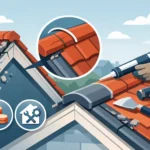
Not every leak comes from dramatic storm damage. Some urgent leaks are caused by long-standing wear that only becomes obvious when the weather turns. A cracked tile, lifted flashing, split felt, failing chimney pointing, or worn leadwork can all let water in. Flat roofs are particularly vulnerable if water has been ponding for some time or if the membrane has started to fail at the joints.
On pitched roofs, slipped or broken tiles are common, especially after high winds. Around chimneys, skylights, and roof junctions, the issue is often failed flashing or mortar rather than the main roof covering itself. On older properties, the roof may have several weak points at once, which is why proper inspection matters.
There is also the question of whether it is definitely a roof leak. Condensation in loft spaces, leaking pipework, and overflowing tanks can sometimes mimic roof problems. From a distance they can look similar, but the repair needed is very different. That is one reason experienced assessment saves time and unnecessary cost.
What to avoid during emergency roof leak repair
A temporary fix has its place, but there is a difference between a temporary measure and making the problem harder to diagnose. Roofing sealants, tapes, and patch products can help in the right situation, but random application often traps moisture or diverts water elsewhere. That can turn a simple repair into a wider issue.
It is also best not to assume the leak is directly above the water mark. Roof leaks can travel a surprising distance before becoming visible indoors. Chasing the drip instead of the entry point often leads to wasted effort.
Most importantly, do not go onto the roof without the right access and experience. Even a single-storey extension can be dangerous in wet or windy conditions. A safe inspection from a professional is far cheaper than dealing with an injury.
A temporary repair is not the same as a finished repair
In genuine emergencies, a roofer may need to carry out a short-term repair first to stop immediate water ingress. That could mean securing a loose area, covering exposed sections, or making a temporary patch until the weather improves or materials are available. This is often the right call, especially after storm damage.
But a temporary repair should lead to a proper solution. If the underlying issue is damaged underlay, failed flashing, deteriorated felt, or weakened surrounding materials, that still needs to be put right. The aim is not only to stop today’s leak but to prevent the next one.
When to call a roofer immediately
If water is entering quickly, affecting electrics, spreading across ceilings, or coming through in more than one place, it is time to call for urgent help. The same applies if the leak has started after visible storm damage, if roof materials have fallen, or if you suspect damage around a chimney or flat roof edge.
Commercial properties and rented properties often need especially fast action because disruption can escalate quickly. A small leak above a hallway at home is one thing. A leak above a shopfront, office ceiling, or occupied rental can become a health and safety issue as well as a maintenance problem.
For property owners in Kent and London, local response matters. A contractor who knows the area, the common roof types, and the weather patterns affecting local properties is often better placed to act quickly and recommend the right repair rather than a generic patch.
What a proper inspection should cover
A reliable emergency visit should do more than look at the obvious wet patch. The inspection needs to identify where water is getting in, what materials have failed, whether the structure beneath has been affected, and whether the leak is isolated or part of a wider issue.
That may include checking tiles or slates, ridge lines, valleys, lead flashing, chimney details, flat roof coverings, fascias, soffits, and guttering. Inside the loft or ceiling void, signs of staining, saturated insulation, timber dampness, and water trails help build a clearer picture.
This is where experience counts. Some leaks are straightforward, but others are deceptive. A good roofer will explain what they have found in plain terms, outline whether a temporary repair is enough for now, and give a clear recommendation for any further work needed.
Cost depends on access, damage, and urgency
People naturally want a price straight away, but emergency roof work is one of those jobs where it depends on several factors. A simple slipped tile repair is very different from a leaking flat roof with soaked decking underneath. Access also matters. Scaffolding, height, conservatories, and restricted spaces can all affect the scope of work.
Urgent call-outs may cost more than scheduled visits, especially outside normal working hours, but leaving a leak untreated usually costs more in the long run. Water damage spreads quietly. What begins as a roof repair can become redecoration, plaster replacement, timber repair, insulation replacement, and mould treatment if it is left too long.
How to reduce the chance of another emergency
Not every leak can be predicted, especially after severe weather, but many can be avoided with routine checks and timely repair. Loose tiles, damaged felt, blocked gutters, and worn flashing usually show signs before they fail completely. The trouble is that these signs are often missed until water gets inside.
Regular inspections are worthwhile, particularly after storms or if your roof is ageing. Flat roofs should be checked for standing water, splits, and edge failure. Pitched roofs benefit from checks around ridges, valleys, chimneys, and any area that has been repaired before. If a small issue is caught early, the repair is usually simpler and less disruptive.
A dependable contractor will also tell you when a repair is enough and when a larger section needs attention. That honesty matters. Not every leak means a new roof, but equally, repeated patching on a failing roof is not good value either.
When a leak starts, speed matters, but so does judgement. Keep the property safe, contain the water, avoid risky short cuts, and get the roof assessed properly. A fast, well-handled response can protect far more than the roof itself – it can save the ceilings, walls, electrics, and day-to-day running of the property as well.

Comment (0)