
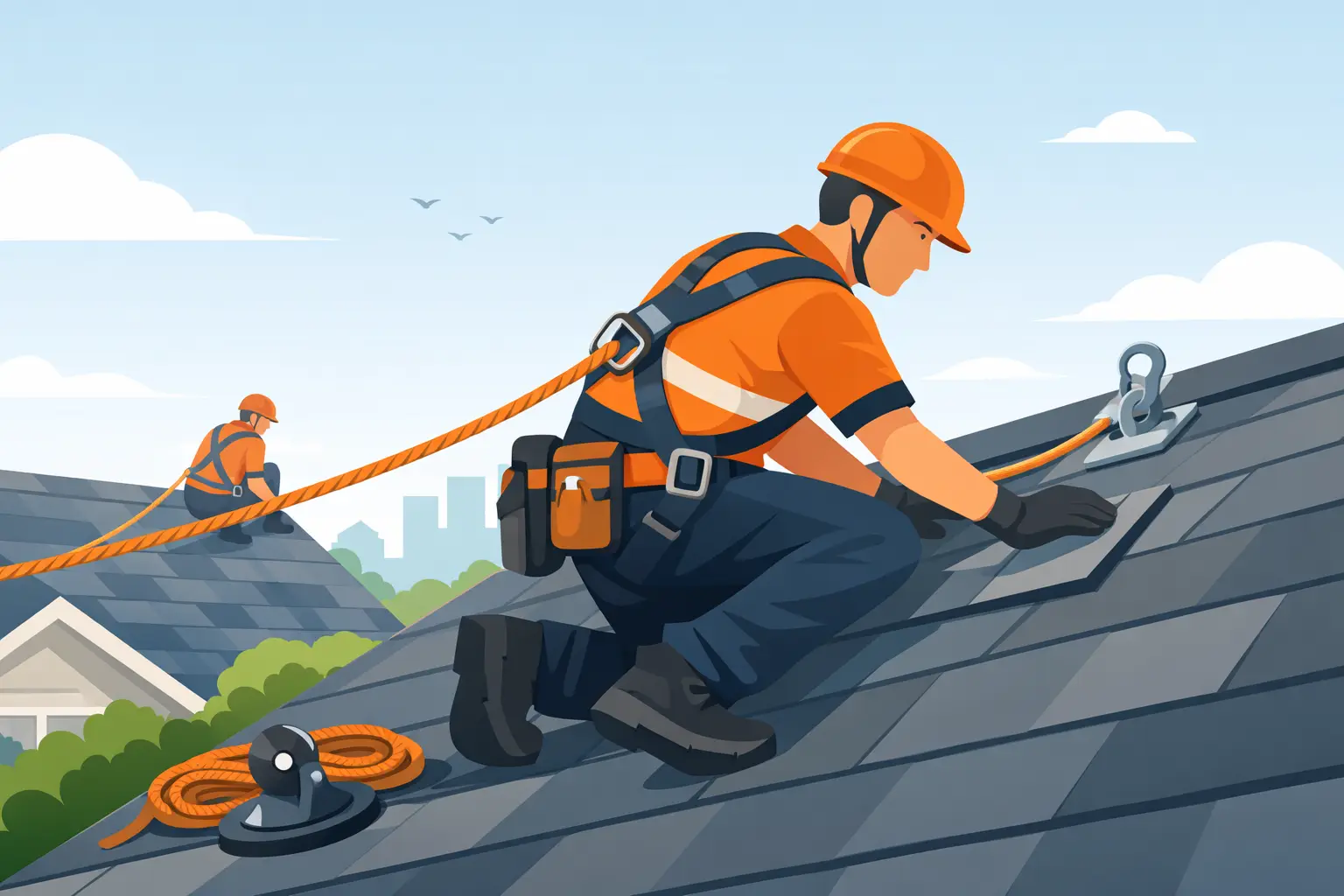
How Do Roofers Stay on the Roof Safely?
Standing at pavement level, it can look like roofers are simply walking around on a steep surface without much between them and a serious fall. That is usually what people mean when they ask, how do roofers stay on the roof. The short answer is training, proper access equipment, fall protection, good judgement, and a clear understanding of when not to go up at all.
For property owners, that matters for more than curiosity. Safe roofing work is usually better roofing work. A contractor who takes roof access, edge protection and weather conditions seriously is more likely to protect your property, avoid rushed mistakes and carry out repairs or installation work to a proper standard.
How do roofers stay on the roof in practice?
It is not down to balance alone, and it is certainly not guesswork. Professional roofers stay secure by combining several methods at once. The exact setup depends on the roof pitch, the roof covering, the building height, the access point and the condition of the structure itself.
On some jobs, a roofer may be working from scaffolding with guard rails and a properly boarded platform. On others, they may use roof ladders that hook over the ridge to spread weight safely across the slope. On more complex or higher-risk work, a harness and anchor system may also be used. There is no single answer that fits every property because one house extension, one chimney stack and one commercial roof can all require different control measures.
That is why experienced contractors inspect first and start work second. If a roof is fragile, slippery, damaged or poorly accessible, the method changes. In some cases, work is delayed until safer arrangements are in place.
The equipment that keeps roofers secure
Most people notice the ladder first, but the ladder is only one part of the picture. Safe roofing work usually starts with stable access from the ground, often supported by scaffolding or access towers where needed. A standard ladder may help a roofer reach the roofline, but it is not normally the only thing keeping them safe while they work.
Roof ladders are a key piece of equipment on pitched roofs. These are designed to rest across the roof slope and hook over the ridge. That spreads the load and gives the roofer a much more stable position than standing directly on tiles or slates. It also reduces the risk of damaging the roof covering while moving about.
Harnesses can be used as well, particularly on steep roofs, awkward roof sections or higher-level work where collective protection alone is not enough. A harness is only effective if it is attached to a suitable anchor point and used correctly. Wearing one without proper anchorage gives a false sense of security, which is one reason trained use matters.
Footwear also plays a bigger role than many property owners realise. Roofers need boots with reliable grip and support. Wet leaves, moss, loose grit and dust can all change footing quickly. The right footwear will not make an unsafe roof safe on its own, but it does help roofers maintain control while moving and working.
Why technique matters as much as equipment
Safe roof work is not just about what a roofer wears or brings to site. It is also about how they move. Experienced roofers are trained to keep their weight centred, test surfaces, avoid sudden shifts and work in a way that keeps three points of contact whenever possible during access.
They also know that different materials behave differently. Concrete tiles, clay tiles, slate, felt, fibreglass and sheet roofing all have their own risks. Some surfaces become very slippery when damp. Others may crack under load, especially if they are old or already weakened. Walking in the wrong place can damage the roof and put the worker at risk at the same time.
That is why roofers do not just step wherever looks convenient. They plan their route across the roof, place equipment carefully and avoid overreaching. If a task cannot be done safely from one position, they reposition properly rather than stretching too far.
Weather is a bigger factor than many people think
One of the most honest answers to how do roofers stay on the roof is this: sometimes they do not. If conditions are poor, a reputable roofer will postpone external work rather than force it.
Rain, frost, high winds and even strong sun can all affect roof safety. Wet tiles can be slick, gusts can throw off balance, and extreme heat can make surfaces softer or harder to work on depending on the material. In winter, ice and morning frost can make a roof dangerous even if it looks clear from the ground.
This can be frustrating if you want a repair completed quickly, especially after a leak or storm damage. But stopping work in unsafe conditions is usually the right call. It protects the workers, your roof and the quality of the finished job. Rushed roofing often leads to broken tiles, poor sealing or temporary fixes that do not last.
How roof pitch and roof type change the approach
Not all roofs present the same level of risk. A low-pitch extension roof is very different from a steep tiled roof on a period property. Flat roofs are often seen as safer, but that depends on their condition, edge protection and whether the surface is stable and dry.
Pitched roofs generally need more careful movement and often more specialised access equipment. The steeper the pitch, the more likely additional support systems will be needed. Chimney work adds another level of complexity because the roofer may be working higher up with less room to manoeuvre.
Fragile roofs need even greater caution. Older roof lights, weakened boarding, decayed timbers and some sheet materials can fail under a person’s weight. In those cases, staying on the roof may mean not walking directly on it at all. The work may need staging, crawling boards, edge protection or alternative access methods.
What professional planning looks like on site
A reliable roofing contractor does more than arrive with ladders and start climbing. There should be a proper look at the site, the access, the condition of the roof and the surrounding hazards. Nearby conservatories, uneven ground, overhead cables and public access areas all affect how work should be set up.
This planning stage helps answer practical questions. Can the roof be reached safely from a ladder, or is scaffolding required? Is the roof covering stable enough to work on? Will materials need to be lifted differently? Are there fragile sections near the work area? Good contractors ask these questions before committing to the method.
For homeowners and landlords, this is often a useful sign of professionalism. If a roofer is too quick to dismiss safety arrangements, that should raise concerns. Careful preparation is not overcautious. It is part of delivering dependable workmanship.
How do roofers stay on the roof without damaging it?
This is another concern for property owners, and rightly so. Staying safe should not come at the cost of cracked tiles, damaged ridges or marked flat roofing. Skilled roofers use access methods that protect both themselves and the roof surface.
Roof ladders, crawl boards and correctly placed load-bearing points all help spread pressure. So does knowing where the structure beneath the roof covering offers proper support. On tiled roofs, stepping in the wrong place can break tiles and create new leaks. On flat roofs, careless foot traffic can damage the membrane or disturb details around outlets and upstands.
This is one reason experience matters. A contractor who understands both safety and roof construction is far less likely to cause avoidable damage while carrying out repairs, installations or inspections.
What property owners should look for
You do not need a technical background to spot the basics. If you are arranging roof work in Kent or London, it is reasonable to ask how access will be handled, whether scaffolding is needed, and how the team will protect both the property and the people on site.
Look for a contractor who is clear rather than vague. They should be able to explain the approach in plain language, not brush the question aside. Professional roofers understand that safety and quality go together. Companies with solid local experience, such as All Care Property Maintenance, know that customer confidence is built long before the first tile is lifted.
It also helps to pay attention to how a contractor talks about timing. If someone promises to work through poor weather regardless, that is not always a positive sign. A dependable roofer knows when to proceed and when to wait for safer conditions.
When you see a roofer working confidently at height, what you are really seeing is preparation behind the scenes – the right equipment, the right method and the judgement that comes with years on the job. If you ever need roof repairs, installation work or an inspection, the safest question is often the simplest one: how will you carry out the work properly and safely on my property?

Comment (0)