
How Much Does Chimney Repointing Cost in the UK?
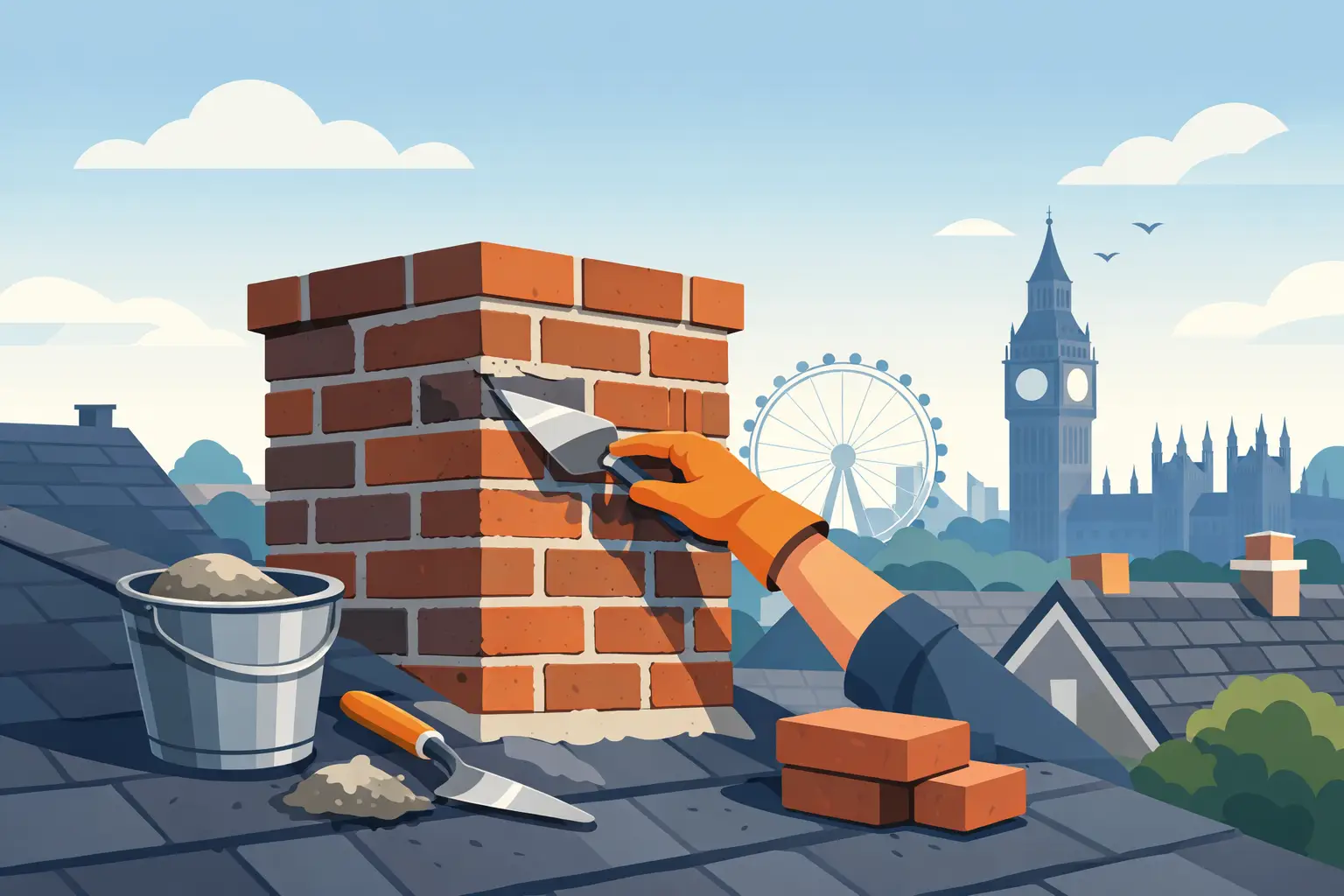
A chimney can look sound from ground level while its mortar joints are quietly failing above the roofline. Once gaps open up, rain can work into the brickwork, frost can force the damage wider, and loose masonry can become a safety concern. So, how much does chimney repointing cost? For most UK properties, expect a professional repair to cost roughly £450 to £1,800, although the final figure depends heavily on access, chimney size and the condition of the stack.
The lowest quotes usually cover a small, localised repair where access is straightforward. A full repoint of a tall or badly weathered chimney, particularly where scaffolding and related repairs are needed, will cost more. The right answer comes from an inspection, not a price guessed from a photograph.
How Much Does Chimney Repointing Cost?
As a practical guide, minor repointing to a small area of a chimney stack may cost around £450 to £750. Repointing several damaged sections or most of a standard stack often falls between £800 and £1,500. A full repointing job on a larger chimney, or work involving difficult access, can reach £1,800 or more.
These figures normally include removing loose mortar, cleaning out the joints to a suitable depth, applying fresh mortar, and leaving the work area tidy. They may not include scaffolding, replacement bricks, leadwork repairs, chimney pot work, flaunching or repairs to the chimney’s crown. A clear written quotation should separate these items so you know precisely what is being allowed for.
In London and parts of Kent, access arrangements, parking restrictions and the height or layout of older properties can influence labour and scaffold costs. That does not mean the most expensive quote is automatically the best one. It does mean that a contractor needs to assess the stack properly before offering a dependable price.
What Changes the Cost of Chimney Repointing?
The biggest variable is access. Chimneys sit at the highest point of a property, so safe working arrangements are essential. If a roofer can safely reach a low stack from a roof ladder or suitable access equipment, costs may stay lower. Where full scaffolding is required, it can add approximately £500 to £1,200 or more, depending on the property and how long it must remain in place.
The extent of damage also matters. Repointing is most cost-effective when mortar has started to crumble but the bricks remain secure. If joints have eroded deeply, bricks are spalled, or the stack is leaning, the repair may involve replacing damaged bricks or rebuilding part of the chimney. At that stage, it is no longer a simple repointing job.
The chimney’s size, height and position will affect the time required. A single, compact stack is generally quicker to repair than a large shared stack on a period property. Chimneys built close to neighbouring homes, above a conservatory, or on a steep roof may also need more careful access planning.
Mortar choice is another consideration. Older brickwork can require an appropriate lime-based mortar rather than a hard modern mix. Using the wrong mortar can trap moisture or cause softer historic bricks to deteriorate over time. Suitable materials are not usually the main driver of the bill, but using them correctly is part of a lasting repair.
Finally, weather can affect scheduling. Mortar needs reasonable conditions to cure properly. Persistent heavy rain, freezing temperatures or very hot, dry conditions may delay work, but rushing a repair in unsuitable weather can compromise the finish.
Repointing, Flaunching or Rebuilding: What Do You Need?
These terms are often used together, but they describe different repairs. Repointing means renewing the mortar between the chimney bricks. It is intended to restore the weatherproof outer face of the stack and help keep bricks stable.
Flaunching is the mortar bed around chimney pots. When flaunching cracks or breaks down, pots can become loose and water can enter around their base. It is commonly repaired alongside repointing if the chimney top is already being worked on.
A rebuild may be necessary where bricks are loose, the stack has moved, the top courses are unstable, or deterioration is too extensive for fresh pointing to provide a safe repair. Rebuilding costs more, but repeatedly patching a structurally unsound stack is poor value and can leave the underlying risk unresolved.
An experienced roofer should explain which work is genuinely needed and why. Ask whether the quote is for spot repairs, full repointing, chimney flaunching, replacement bricks, or a partial rebuild. Vague descriptions make it hard to compare quotations fairly.
Signs It Is Time to Repoint Your Chimney
You do not need to wait until a brick falls before arranging an inspection. Crumbly or missing mortar is the clearest warning sign, especially around the upper courses of the stack. You may also notice cracks in the joints, loose pieces of mortar in gutters, damp staining on internal chimney breasts, or small fragments of brick on the ground below.
Vegetation growing from the joints can be another indication that water is settling in weakened mortar. White salt deposits may show that moisture is moving through the brickwork, although they do not always mean repointing alone is required.
Inside the property, a damp patch around a chimney breast can originate from defective pointing, failed flashing, cracked flaunching or a chimney cowl issue. The chimney needs to be checked as a whole. Treating the visible indoor stain without locating the route of water entry usually leads to repeat problems.
Why Cheap Chimney Repairs Can Cost More Later
A low price can be tempting, particularly when the work is high up and difficult to inspect from the ground. However, poor preparation is a common reason pointing fails early. The old loose mortar must be removed properly, joints need sufficient depth, and the fresh mortar must be compacted and finished carefully.
Simply smearing mortar over tired joints may improve the appearance for a short time but does little to strengthen the stack or stop water penetration. Equally, replacing all mortar with an unsuitable hard mix can damage older masonry over time. Good workmanship is less about making the chimney look new and more about giving it a durable, weather-resistant repair that suits the building.
A professional quote should also account for safe access, protection of the roof and surrounding areas, removal of waste, and a proper inspection of the stack, pots and flashings while access is available. These details protect both the property and the people carrying out the work.
Getting a Fair Quote for Your Chimney
When requesting estimates, provide clear photographs if safe to do so, but expect the contractor to inspect the chimney before confirming the price. A site visit helps identify whether the issue is limited to mortar joints or whether there are related defects that need attention.
It is sensible to ask what access method is included, how much of the stack will be repointed, whether damaged bricks are included, and whether flaunching or flashing has been checked. You should also ask how the work will be protected from poor weather and whether waste removal and clean-up are part of the quotation.
For homeowners, landlords and property managers, planned chimney maintenance is often far less disruptive than waiting for a leak or loose masonry to create an urgent problem. A well-timed repair can preserve the stack, protect the roofline and avoid more extensive rebuilding work later on.
At All Care Property Maintenance, chimney work is assessed with the surrounding roof condition in mind, so you receive a practical recommendation rather than a one-size-fits-all fix. If your mortar joints are showing signs of wear, arranging an inspection now can give you a clear cost and the confidence that the repair is being handled safely.


Comment (0)