
Chimney Flaunching Repair: What to Fix Fast
A cracked mortar bed around a chimney pot might not look urgent from the ground, but it is often where bigger roofing problems begin. Chimney flaunching repair is one of those jobs that protects far more than the top of the stack. Done at the right time, it helps prevent water getting into the chimney structure, keeps pots secure, and reduces the risk of masonry damage spreading down into the roofline.
For many property owners, the first sign is not the flaunching itself. It is damp patches near the chimney breast, bits of mortar on the roof, or a pot that suddenly looks slightly out of line. By that stage, the weather has usually been working on the problem for some time. The good news is that this is often a straightforward repair when caught early.
What chimney flaunching actually does
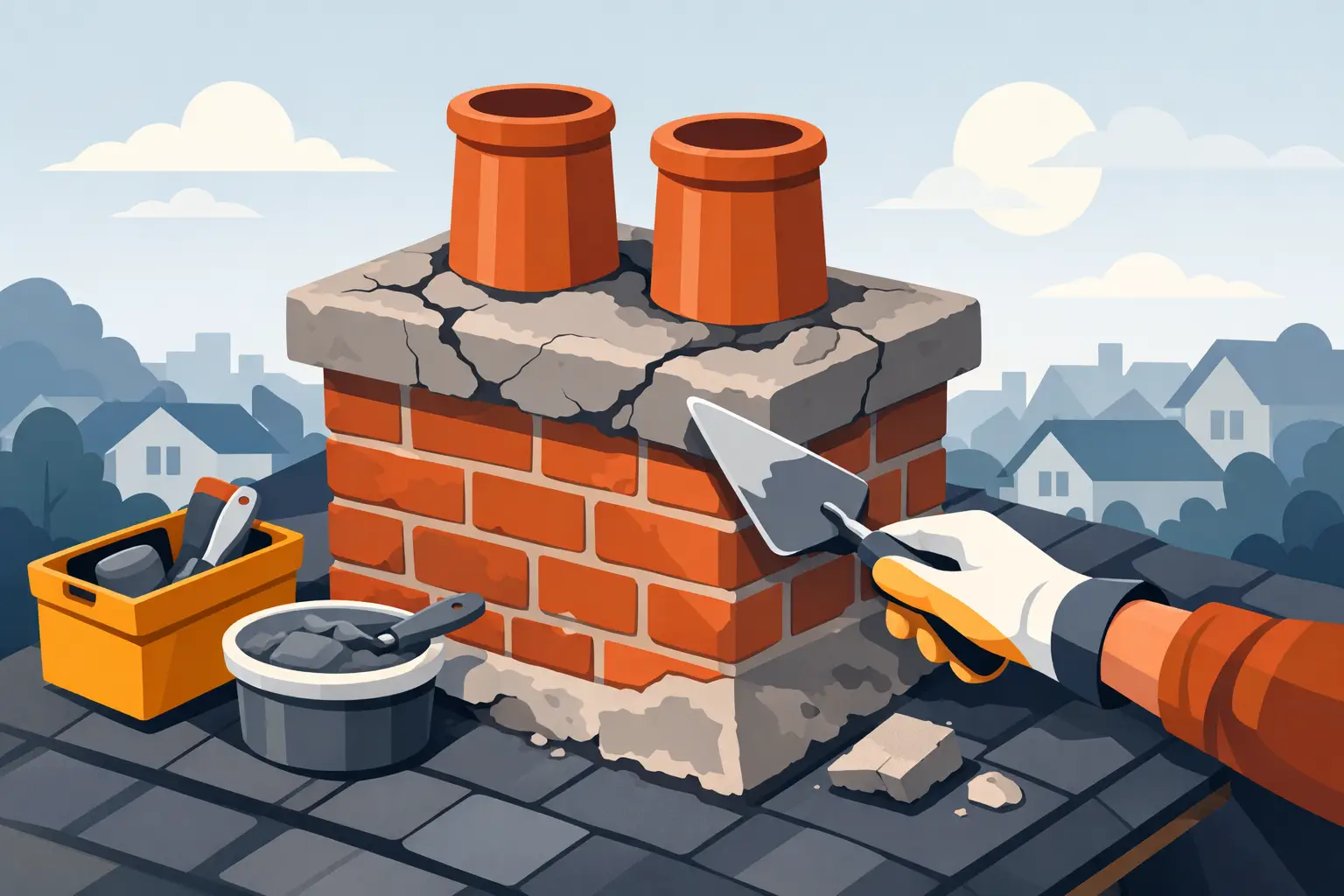
Flaunching is the sloped mortar that holds and seals the chimney pot in place at the top of the stack. Its job is simple but important. It supports the pot, sheds rainwater away from the opening, and helps protect the top of the chimney from water penetration.
Because it sits right at the highest exposed point of the roof, it takes the full force of wind, rain, frost and temperature changes. Over time, even well-finished flaunching can start to crack, loosen or break away. Once that happens, water can sit in the gaps, freeze in cold weather and make the damage worse.
This is why chimney flaunching is not just a cosmetic detail. It plays a practical part in keeping the chimney stable and weather-resistant.
Signs you may need chimney flaunching repair
In many cases, there are a few clear warnings before the issue becomes serious. Crumbling mortar around the pot is one of the most common. You may also notice visible cracking, small sections missing, or staining on the outside of the chimney stack.
From ground level, a leaning chimney pot can be a major clue. If the pot no longer looks secure, the flaunching beneath it may have failed. Inside the property, damp near the chimney breast or signs of moisture in the loft can point to water entering from above.
Sometimes the only clue is debris. If pieces of mortar are turning up on the roof, in the guttering or on the ground below, it is worth arranging an inspection. A minor repair is far easier and safer than waiting for a chimney pot to come loose in bad weather.
Why flaunching fails
Age is part of it, but exposure is the real issue. Chimneys deal with harsher conditions than most parts of the roof because they are fully exposed on all sides. Rain soaks into small cracks, frost expands them, and strong winds put movement through the pot and stack.
Poor workmanship can also shorten the life of flaunching. If the mortar mix is wrong, if the slope is too flat, or if the repair was done as a quick patch rather than properly formed and sealed, it may fail much sooner than expected.
There is also a difference between isolated flaunching damage and wider chimney problems. If the stack itself is leaning, the brickwork is badly weathered, or the lead flashing has failed, the repair may need to go beyond the mortar at the top. That is why a proper inspection matters. It is not just about replacing what has cracked, but understanding why it has failed.
What happens during a chimney flaunching repair
A good repair starts with safe access and a close inspection. The damaged or loose flaunching is removed, the area is cleaned back, and the condition of the chimney pot and top courses of brickwork is checked. If the pot is unstable or damaged, that needs dealing with at the same time.
Fresh flaunching mortar is then applied and shaped with the correct fall so water runs away rather than sitting on the surface. The finish needs to be neat, solid and properly bonded, not just pushed around the base of the pot. On some chimneys, the repair may also involve renewing more than one pot position if there are multiple flues.
Once complete, the chimney should be left with a firm, weathered top section that supports the pot and sheds water properly. It is a small area, but the standard of the work makes a real difference to how long the repair lasts.
Repair or full replacement?
It depends on the condition of the chimney as a whole. If the rest of the stack is sound and the damage is limited to the top mortar bedding, a targeted repair is often the right answer. It is cost-effective and usually enough to restore the chimney’s weather protection.
If the flaunching has failed because the pot is loose, the crown is badly cracked, or the top brickwork is deteriorating, more extensive work may be the better option. In those cases, carrying out a small patch repair can be false economy. The aim should always be to fix the problem properly, not just make it look tidier for a few months.
This is where honest advice matters. Property owners do not need guesswork or jargon. They need to know whether the chimney can be repaired simply, whether further roof-related work is needed, and what will give the best value over time.
Why timing matters with chimney flaunching repair
Leaving damaged flaunching through another wet season can create avoidable costs. Water entering around the pot can track into the brickwork, affect the inside of the flue, and increase wear on the chimney stack. In winter, freeze-thaw damage can speed that process up quickly.
There is also the safety aspect. A pot that is no longer firmly bedded can become unstable. On a residential or commercial property, that is not something to leave to chance. What starts as cracked mortar can turn into a loose pot or falling debris.
Acting early usually keeps the job smaller, simpler and less disruptive. It also gives you the chance to pick up any related issues such as flashing defects or damaged pointing before they become major repairs.
The value of a proper roof-level inspection
From the ground, chimney defects are easy to miss and easy to misread. What looks like a bit of surface wear may be deeper cracking, while what seems like a flaunching issue may involve the stack, the pot or the leadwork around the base.
A roof-level inspection gives a clearer picture. It helps identify whether the mortar has failed in one isolated spot or whether the top of the chimney has reached the point where more substantial work is needed. That is especially useful for landlords, property managers and commercial site operators who need practical answers and clear budgeting.
In areas such as Kent and London, where properties range from older period homes to newer commercial buildings, chimney construction can vary quite a bit. The right repair approach depends on the age, height and condition of the stack, not just the visible crack on the surface.
Choosing the right contractor for the job
Chimney work is not a job for shortcuts. Safe access, sound judgement and solid roofing experience matter because the repair sits in an exposed part of the property and affects both safety and weather protection.
A reliable contractor should be able to explain what they have found in plain terms, recommend the right level of repair, and provide a transparent quote. Clean working, good communication and dependable scheduling also count for a lot, especially when the work is part of wider roof maintenance.
For many customers, reassurance comes from experience. A company that handles roofing and chimney repairs regularly will usually spot linked issues more quickly than someone treating it as a one-off handyman job. That can save time, money and repeat call-outs later.
When to get it checked
If you can see cracking around the chimney pot, signs of loose mortar, damp near the chimney breast or debris below the stack, it is worth booking an inspection. Even if the chimney is not currently leaking, visible flaunching damage rarely improves on its own.
All Care Property Maintenance deals with this kind of issue as part of practical roof and chimney care, with straightforward advice and repairs carried out to protect the property properly. For homeowners and commercial clients alike, that means less guesswork and more confidence that the work has been done as it should be.
A small repair at the top of the chimney can prevent a much larger problem lower down, and that is usually money well spent before the weather gets another chance.

Comment (0)