
How to Prevent Chimney Leaks Before They Spread
A small damp patch beside a chimney breast can be the first sign of a much bigger problem above the roofline. Water rarely stays where it enters. It can travel along timbers, soak insulation and damage ceilings before becoming obvious indoors. Knowing how to prevent chimney leaks helps protect the roof, the structure of the property and the cost of future repairs.
Chimneys are exposed to every change in the weather. They sit above the main roof, have several joints where different materials meet and are often overlooked until rainwater finds a way through. Regular checks and prompt repairs are far more cost-effective than waiting for a visible leak.
Why chimney leaks are so common
A chimney is not one solid waterproof unit. It is made up of brickwork, mortar joints, lead flashing, a chimney pot, flaunching and, in some cases, a cover or cowl. Each part must shed water properly. If one section fails, moisture can get behind the roof covering or into the chimney stack.
In Kent and London, driving rain, frost and changing temperatures can be particularly hard on older stacks. Mortar expands and contracts, leadwork can lift or split, and porous brickwork may hold water rather than shedding it. Even a well-built chimney needs maintenance over time.
The right repair depends on where the water is entering. A damp patch near the fireplace does not automatically mean the flue is at fault. It could be failed flashing at roof level, cracked render, open mortar joints or rain entering through an uncovered pot. A proper inspection should identify the source before any work is quoted.
How to prevent chimney leaks with regular roof checks
The most reliable way to prevent chimney leaks is to inspect the chimney and surrounding roof at least once a year, ideally before the wetter autumn and winter months. You should also arrange a check after a major storm, particularly if there are slipped tiles, debris on the ground or new signs of damp inside.
From ground level, look for obvious changes such as leaning pots, missing mortar, vegetation growing from joints, staining on brickwork or flashing that appears raised. Binoculars can help, but do not climb onto the roof or lean ladders against a chimney stack. Chimney repairs involve working at height and damaged masonry can be unsafe underfoot.
Inside, check the loft and rooms around the chimney breast. A musty smell, dark marks, bubbling paint, peeling wallpaper or damp insulation can all point to water ingress. Take note of when the issue appears. Damp that worsens after heavy rain is likely to be a roof or chimney issue, while condensation has different causes and needs a different solution.
Keep lead flashing sound and properly sealed
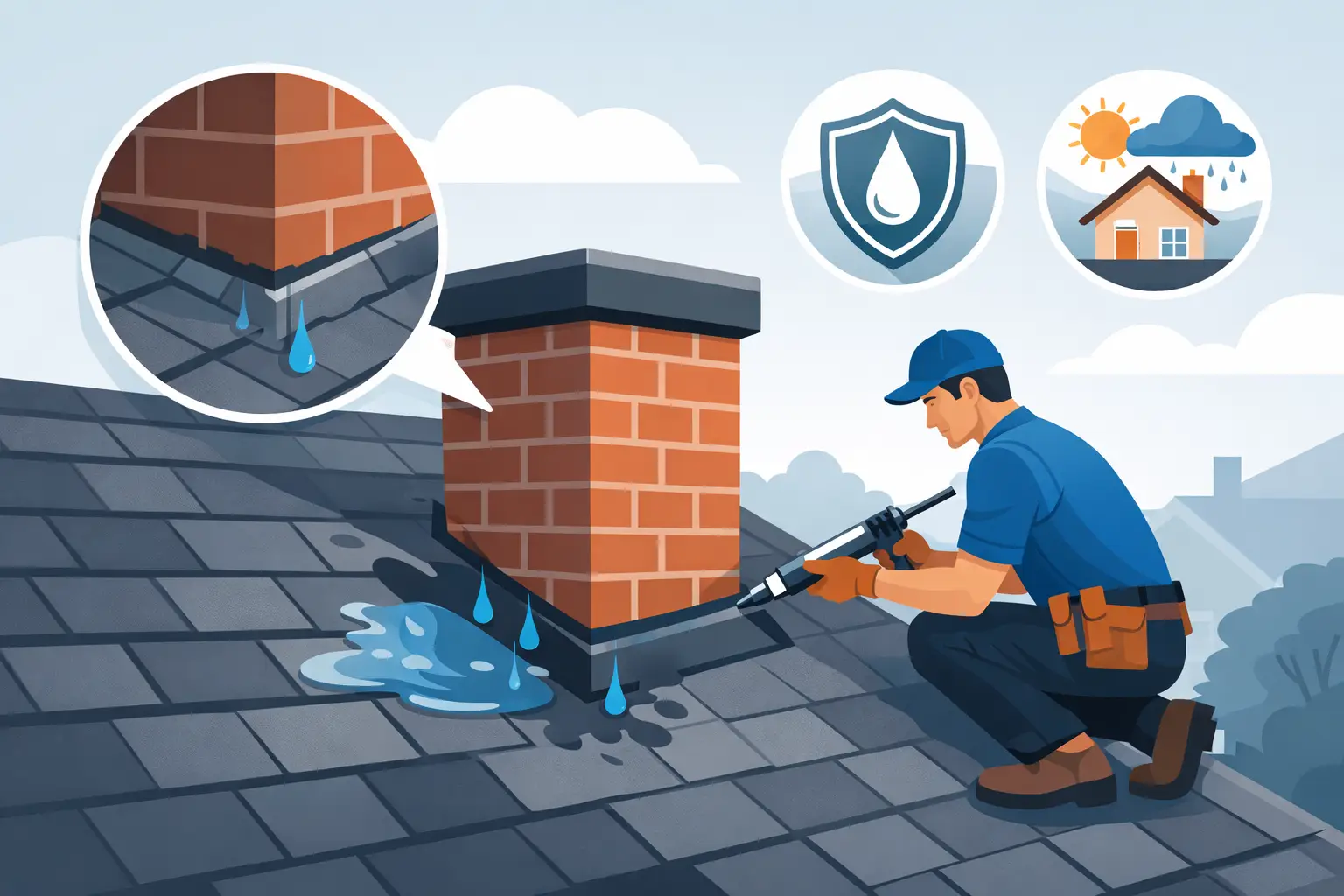
Lead flashing is one of the most important defences against chimney leaks. It forms a weatherproof connection between the chimney stack and the roof covering, directing rainwater away from the joint. Because the chimney and roof move slightly over time, flashing can crack, pull away from mortar joints or lose its seal.
Common flashing problems include split lead, poorly fitted replacement work, loose mortar pointing around the lead and gaps where previous sealant has failed. Applying sealant over a damaged area may slow a leak temporarily, but it is rarely a lasting repair. If the lead is tired, undersized or incorrectly dressed, replacement or proper repair is normally the better option.
A professional roofer will assess the condition of the step flashing, soakers and back gutter behind the chimney. The back gutter is especially important because it handles water running down the roof slope behind the stack. If it is blocked, too shallow or poorly formed, water can back up and enter the roof structure.
Repair damaged pointing before water gets in
Mortar joints are the protective barrier between chimney bricks. Once pointing becomes loose, cracked or recessed, rain can penetrate the stack. During cold weather, trapped moisture can freeze and expand, causing further cracking and loosening more mortar.
Repointing should not be treated as a cosmetic job. Old or soft brickwork needs a suitable mortar mix and joints must be prepared correctly so the repair bonds properly. Using an overly hard mortar on older bricks can create its own problems, as water may be forced through the brick faces instead of escaping through the joints.
Look out for crumbling mortar on the roof, small pieces of brick in gutters or visible gaps around the stack. Early repointing is usually straightforward. Leaving it until bricks are loose or the stack is unstable can turn a maintenance job into a more extensive rebuild.
Check the chimney pot, cowl and flaunching
The top of the stack is another frequent entry point for rainwater. Chimney pots should be secure, free from cracks and fitted with an appropriate cowl or cap where needed. An open, unused flue can allow rain directly into the chimney, leading to damp patches, staining and unpleasant odours indoors.
Not every chimney needs the same type of cowl. A working fireplace, boiler flue and disused chimney each have different ventilation and safety requirements. Never block a live flue without professional advice. Incorrect caps can affect ventilation, cause smoke to blow back into the property or create risks for appliances that rely on safe flue operation.
Flaunching is the sloping mortar bed around the base of the chimney pots. Its job is to direct water away from the pot and off the stack. When flaunching cracks or becomes flat and worn, water can sit around the pot bases and work into the chimney. Renewing failed flaunching is a small but valuable preventative repair when carried out before damage spreads.
Maintain the roof around the chimney
A chimney only performs as well as the roof covering around it. Slipped, cracked or missing tiles near the stack can let rain beneath the roof line, where it may be mistaken for a chimney leak. Broken slates, damaged ridge tiles and failing underfelt can all contribute to damp in the same area.
Keep gutters and valleys clear, particularly where leaves, moss and debris collect. Overflowing gutters can soak the lower part of a chimney stack and saturate brickwork over repeated wet periods. Trees close to the property may add debris to gutters and can cause physical damage in high winds, so sensible pruning is worthwhile.
Moss should also be approached carefully. Heavy moss growth can hold moisture against roof tiles and restrict drainage, but aggressive scraping can crack tiles or disturb flashing. A roof maintenance professional can advise whether cleaning is needed and use a method suitable for the age and condition of the roof.
Be cautious with waterproof coatings
Water-repellent treatments can sometimes help reduce rain absorption into sound, breathable masonry. They are not a substitute for repairing open joints, cracked bricks or defective flashing. Coating a stack with hidden defects may trap moisture and delay the discovery of the real issue.
The same applies to paint or render. A fresh finish can improve appearance, but it should only be applied after the stack has been inspected and repaired. If damp is already entering through the top or at roof level, covering the brickwork will not solve it.
Act quickly when you see warning signs
Chimney leaks tend to worsen quietly. By the time water reaches a ceiling, it may already have affected roof timbers, battens or insulation. Contact a roofing professional if you notice damp around a chimney breast, water marks in the loft, loose flashing, failing mortar, a cracked pot or tiles slipping near the stack.
A clear inspection and written estimate give you the information needed to decide on the right repair. In some cases, a simple flashing repair or repointing job is enough. In others, the stack may need more substantial work, especially where years of weather exposure have weakened the brickwork. Honest advice matters because unnecessary work is no better for a property than a short-term patch.
For homeowners, landlords and property managers, planned maintenance is the best protection against disruption. All Care Property Maintenance provides practical chimney, roofing and flashing inspections across Kent and London, with repairs tailored to the condition of the property rather than a one-size-fits-all solution.
If a chimney has not been checked for several years, do not wait for the next heavy downpour to reveal its condition. A timely inspection can turn a potential internal leak into a manageable repair carried out before water has the chance to spread.


Comment (0)