
How to Clean Roof Moss Safely
A roof covered in moss might not look urgent from the ground, but it can start causing trouble long before you see a leak indoors. If you are wondering how to clean roof moss, the safest answer depends on your roof type, how severe the growth is, and whether the tiles are already showing signs of age or damage.
Moss holds moisture against the roof surface. Over time, that trapped damp can shorten the life of tiles, lift edges, clog gutters and create the sort of small faults that turn into expensive repairs. On pitched roofs in particular, thick moss can also affect drainage by slowing the flow of rainwater.
Why roof moss should not be ignored
A little green growth may seem cosmetic, but moss is more than a surface issue. It grows in clumps, spreads steadily, and thrives in shaded, damp areas where the roof stays wet for longer. North-facing slopes, overhanging trees and older roofs are common problem spots.
As moss thickens, it can work its way between tiles and hold water where it should not sit. In winter, that moisture can freeze and expand, which puts added pressure on the roof covering. The result may be cracked tiles, slipped sections or blocked drainage. If your gutters are filling with moss debris after rain, the roof is already telling you it needs attention.
How to clean roof moss without damaging the roof
The biggest mistake people make is treating moss removal like patio cleaning. A roof is not a driveway, and the wrong method can do more harm than the moss itself.
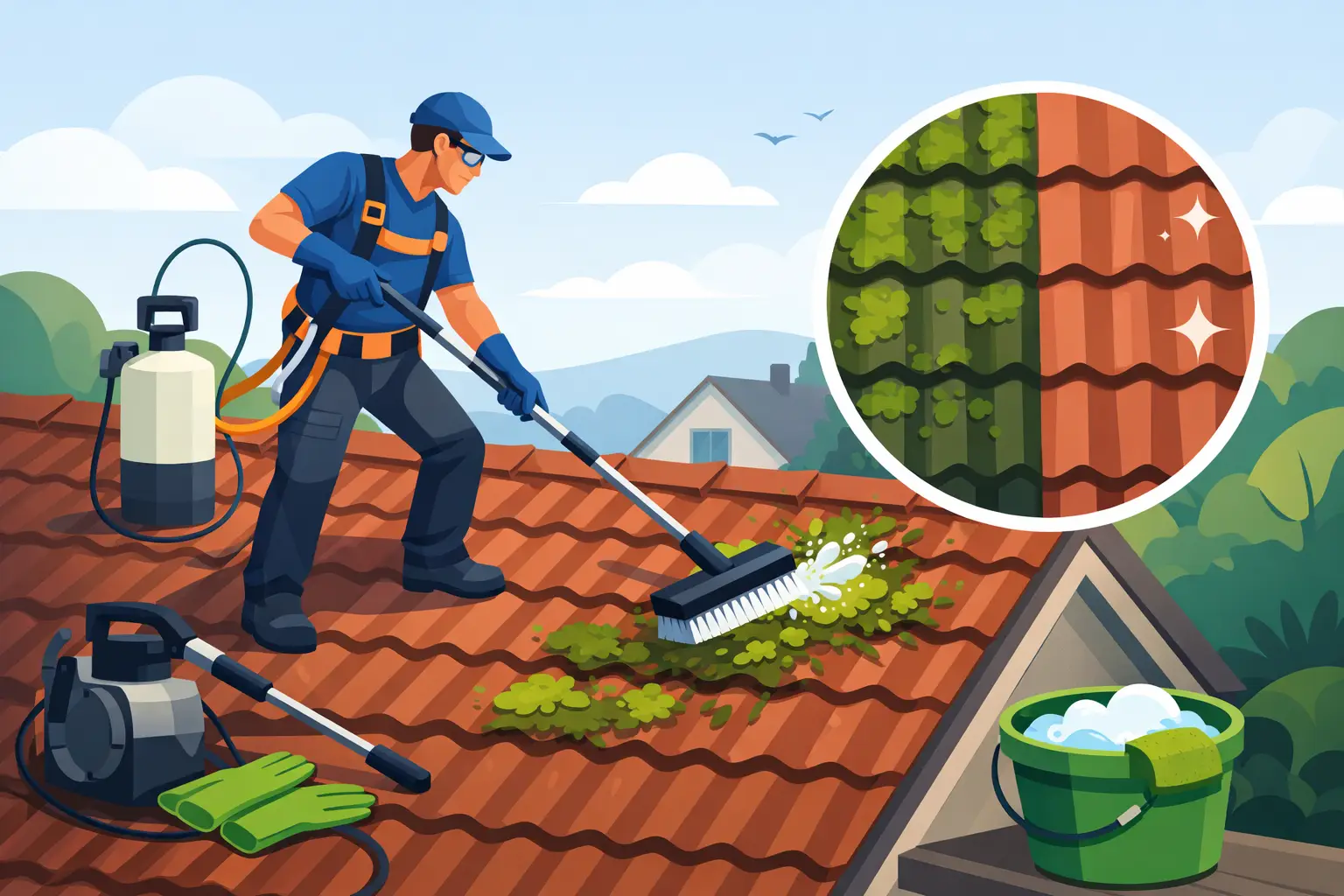
For most tiled roofs, the safest approach is gentle removal followed by treatment. That usually means manually clearing the moss with the right tools, collecting the debris properly, and then applying a suitable roof treatment to slow regrowth. This method takes longer than blasting the roof, but it is far less likely to strip protective surfaces, loosen tiles or force water where it should not go.
Pressure washing can be risky, especially on older roofs, cement tiles, slate, and any roof with existing weak points. Used incorrectly, it can lift tiles, damage pointing, soak the underlay and shorten the roof’s life. In some cases, professional pressure washing is possible, but only with the right assessment, settings and aftercare. It is not a one-size-fits-all solution.
Start with a proper visual check
Before any cleaning begins, inspect the roof from ground level. Look for obvious signs of cracked tiles, slipped tiles, sagging guttering, heavy moss build-up and staining around downpipes. If the roof already looks worn or uneven, cleaning should not be the first step. It needs inspection first.
If access is difficult, the pitch is steep, or the roof is fragile, it is usually better to leave it to a professional contractor. Working at height is the main hazard here, and many DIY attempts go wrong not because of the moss, but because the roof is unsafe to access.
Remove moss carefully, not aggressively
If the roof is suitable for manual cleaning, moss is usually scraped away with tools designed for the tile profile. The key is to work with the shape of the tile rather than against it. Heavy-handed scraping can chip the surface and dislodge edges.
Debris should be removed from the roof and gutters as you go. If it is left to wash down naturally, it can block hopper heads, downpipes and gullies. That creates a second problem just as the first one is being dealt with.
Apply a treatment to slow regrowth
Once the bulk of the moss is removed, a roof treatment can be applied to deal with remaining spores and reduce the speed of regrowth. This matters because scraping alone rarely removes everything. Without treatment, the moss often returns faster than expected.
The right product depends on the roof material and surrounding area. Care is needed near gardens, ponds and neighbouring property. This is another reason professional cleaning is often the better option, especially on larger homes and commercial buildings.
When DIY roof moss cleaning makes sense
There are situations where a homeowner can deal with light moss safely. If the growth is minor, the roof is low-level, access is secure and the tiles are in good condition, simple maintenance may be manageable. That tends to apply more to small extensions, garages or outbuildings than to the main roof of a house.
Even then, caution matters. Walking on roof tiles can crack them, and ladders need to be secured properly. If there is any doubt about stability, pitch or condition, it is not worth the risk.
For many property owners, the sensible middle ground is to arrange an inspection first. That gives you a clear idea of whether the moss is just a cleaning issue or a sign of broader roof wear.
When to call a professional roofer
If the moss is thick, widespread or returning quickly, there is usually more going on than a surface problem. Older roofs, fragile slate, damaged pointing, and blocked gutters all need a careful approach.
A professional roofer can assess whether the roof simply needs cleaning or whether it also needs repairs. That distinction matters. Cleaning a roof with cracked tiles or weak ridge mortar can expose faults that should have been dealt with first.
This is especially relevant on properties across Kent and London where weather exposure, tree cover and age of housing stock vary so much. Two roofs on the same street can need completely different treatment depending on orientation, tile type and previous maintenance.
Common mistakes to avoid
The most common error is using too much pressure. Roof coverings are designed to shed water, not to withstand direct force at close range. Once the surface is damaged, water can start getting in where it should not.
Another mistake is ignoring the gutters. Moss removal without gutter clearance often leads to overflowing rainwater, staining on walls and damp issues around the base of the property. Cleaning the roof and leaving the drainage blocked is only half a job.
It is also a mistake to focus only on the visible moss. If shaded conditions remain the same, regrowth is likely. Overhanging branches, poor drainage and areas that stay damp for long periods all contribute. Sometimes improving light and airflow around the roof helps as much as the cleaning itself.
How often should roof moss be removed?
There is no fixed timetable that suits every property. Some roofs stay clear for years, while others need more regular attention because of nearby trees, heavy shade or persistent damp conditions.
As a general guide, it is worth checking the roof visually at least once or twice a year, particularly after autumn and winter. If you notice moss building up in patches, gutters overflowing with green debris, or water not draining cleanly off the roof, it is time to act.
Regular maintenance is almost always cheaper than waiting until the moss has become heavy enough to cause tile damage or drainage problems. A smaller job done at the right time tends to be safer, quicker and less disruptive.
The best long-term approach
The best answer to how to clean roof moss is not simply getting the moss off as fast as possible. It is cleaning it in a way that protects the roof, deals with the cause where possible, and avoids turning a maintenance job into a repair bill.
That usually means a measured approach – inspect first, remove growth carefully, clear the gutters properly and use a treatment suited to the roof. If repairs are needed, do those before or alongside the cleaning rather than after damage has spread.
For homeowners, landlords and commercial property managers, roof moss is one of those issues that is easy to put off because it sits out of sight. The trouble is that roofs rarely get cheaper to fix by waiting. If the moss is visible from the ground, there is every chance it is already affecting the roof more than you think.
If you are unsure whether your roof needs a clean, a repair or both, a straightforward inspection is the right place to start. A good contractor will tell you honestly what the roof needs, what it does not, and the safest way to keep it in sound condition for the years ahead.


Comment (0)